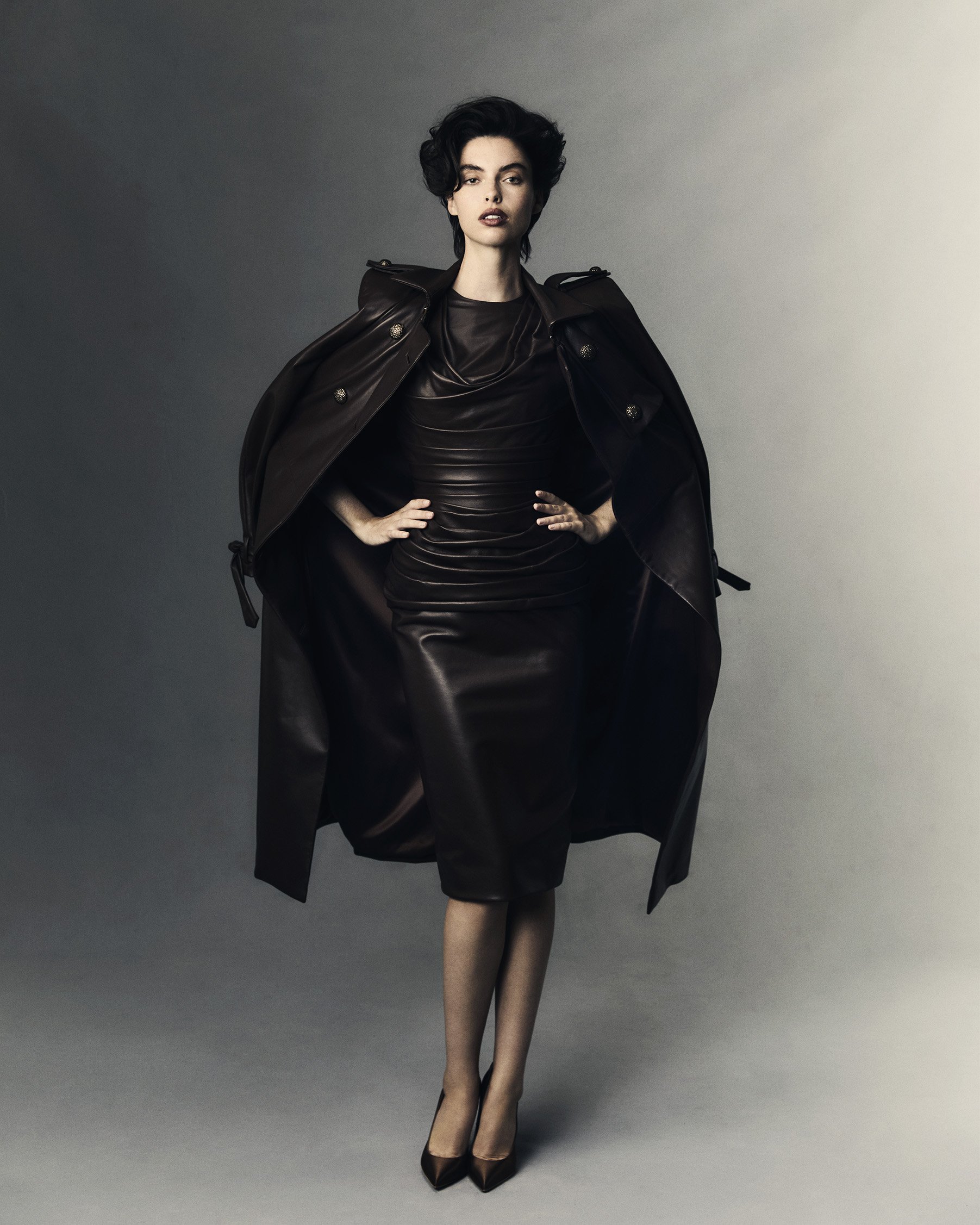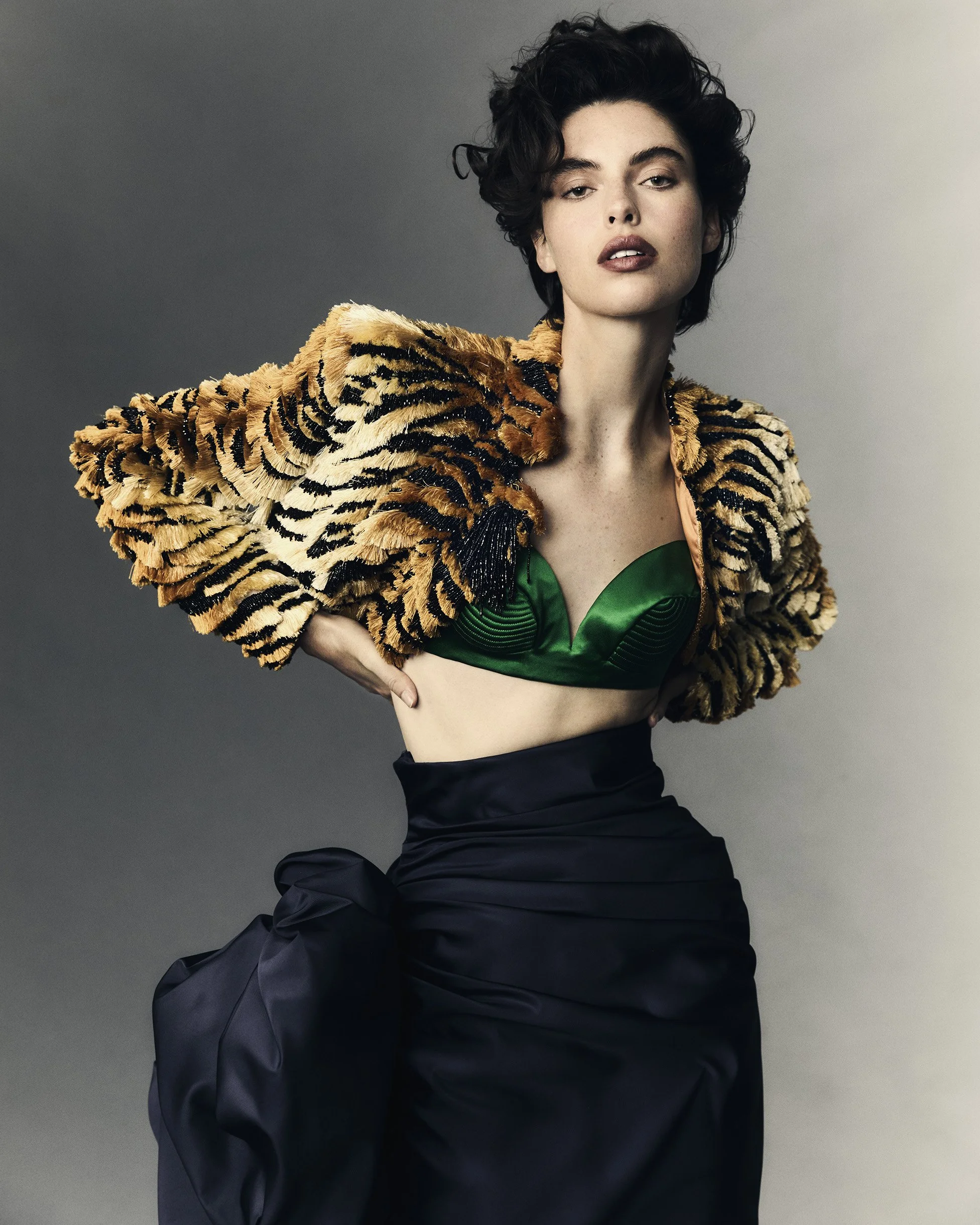

For Autumn/Winter 2026, Nicholas Oakwell Couture looks to Charles James, the Anglo-American couturier who conceived dress as an act of sculpture, architecture and anatomical engineering.
James dressed some of the twentieth century’s most individual women: Millicent Rogers, Dominique de Menil, Austine Hearst, Gypsy Rose Lee, Marietta Tree and Marlene Dietrich. His clothes did not diminish their personalities beneath ceremony. They constructed a space in which those personalities could become monumental.
Nicholas Oakwell approaches that legacy not as an archive to reproduce, but as a method to reactivate.
The collection examines the principles that made James’s work radical: the spiral and the wrap; the displaced seam; the corseted torso; the engineered hip; and the transformation of the back of a dress into its most dramatic elevation. Fabric is not permitted simply to fall. It is gathered, redirected, suspended and projected around the body.
James’s technical discipline is countered by an animal energy particular to Nicholas Oakwell Couture. Tiger stripes, leopard surfaces and feathered volumes enter a world of midnight moiré, black lace, gold cotton lamé, velvet and ceremonial tailoring. Emerald appears as a flash beneath tiger-striped shoulders; gold moves from liquid brilliance into darkness. These elements prevent the collection from becoming an exercise in historical reverence. They introduce instinct, seduction and danger.
Throughout, contrasting surfaces reveal the construction of the silhouette. Matte satin absorbs light; sequins fracture it; lace places the body behind a veil; fringe and feathers register every movement. Black and midnight blue dominate, interrupted by molten gold, bronze, ivory and emerald. The result is a collection built upon tension: sheath and spectacle, discipline and abandon, masculine ceremony and exposed corsetry, historical grandeur and contemporary sexual authority.
Charles James used engineering to make glamour appear inevitable. Nicholas Oakwell Couture AW26 takes that proposition forward, creating clothes that do not merely dress the body, but alter the space around it.